Getting found on Google: a plain guide for UK small businesses (2026)
On this page
“How do I get on Google?” is the question we hear most. The honest answer is not a trick or a paid shortcut, it is getting a handful of basics right, then being patient. Anyone selling you Page 1 in 30 days is selling you ad spend dressed up as SEO.
Here is the plain version.
Google has to understand your site
Before Google can show your business to anyone, it has to read your site and work out what each page is about. That means every page needs a clear, unique <title>, a meta description under 160 characters, and copy that actually mentions what you do and where. Structured data, schema.org markup that tells Google “this is a LocalBusiness, here are the opening hours, here is the address”, helps it understand you faster and earns rich-results displays in the SERP.
Local search is the prize
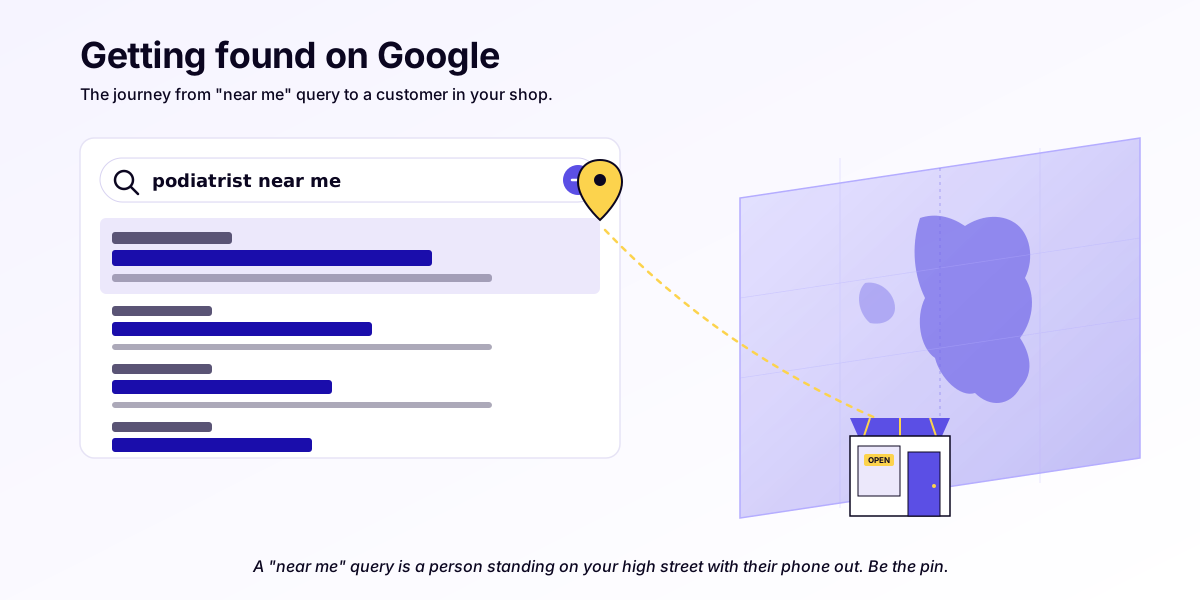
You are not trying to rank for “plumber” across the whole country. You are trying to be the plumber who shows up when someone nearby searches “plumber in Leeds” or “plumber LS28”. That is local search, and it is far more winnable. The way you win it: make your service area and postcodes obvious on every relevant page, not just the contact one.
The basics that genuinely move the needle
- Fast loading. Google measures Core Web Vitals and ranks accordingly. Sub-1-second LCP is the real bar.
- Mobile-friendly. Google ranks the phone version of your site, not the desktop one.
- Clear page titles and descriptions. These are what people see in the SERP, they decide whether anyone clicks.
- Real, useful writing. Pages that answer what customers actually ask, in their words.
- HTTPS. Non-negotiable now, and a small ranking signal. (Free via Vercel, Cloudflare, or any modern host.)
Do not forget your Google Business Profile
Separate from your website but just as important: your free Google Business Profile is what puts you on the map, literally, with your reviews, hours, and phone number. For a lot of local searches, the GBP card is the first and last thing a customer sees. Ignoring it is the biggest unforced error we see.
The short version of getting it right:
- Claim and verify the profile, then fill every field. Half-empty profiles are everywhere, which is exactly why a complete one stands out.
- Choose your categories carefully. The primary category shapes which searches you can appear for, so pick the most specific one that genuinely fits your business.
- List each service you offer in the Services section, in the words customers actually type.
- Add 10 or more real photos of your work, your premises, and your team, and keep your hours current, including bank holidays.
- Ask happy customers for reviews and reply to every one. Replies are public, and they show searchers a business that is awake. Our guide to getting more Google reviews covers how to ask without being awkward.
- Keep your name, address, and phone number identical everywhere they appear: your profile, your website, and any directories.
That is the checklist. The full playbook, categories, services, photos, posts, reviews, and the mistakes that quietly hold profiles back, is in our dedicated deep-dive: Google Business Profile optimisation for UK businesses in 2026. If you would rather someone else handled it, that is what our Google Business Profile optimisation service is for.
It is a long game, but a fair one
Getting found on Google is not instant. It builds over weeks and months as Google crawls your site and trust accumulates. But it is a fair game. A small business with a fast, clear, well-built site beats a bigger competitor with a slow, dated one. The groundwork is what counts.
That groundwork, proper titles, descriptions, schema.org markup, LCP under one second, mobile-first build, is built into every site we run. Want to see where your current site stands? Run the free audit. If you want the full picture, the Marketing and Automation Deep-Dive gives you a written audit and a fixed quote, with the fee credited against any build you go on to commission. From there it is website management from £49 a month, quoted to your business, with no lock-in and cancel any time, and services may vary. Or get in touch and we will talk through what is actually holding you back.
For the bigger 2026 picture, SEO, performance, costs, how every option compares, read the long-form pillar: The complete guide to small-business websites in the UK (2026 edition).
The Local SEO Six (a named checklist)
The six basics that decide whether a UK small business shows up on Google Maps + the Local Pack:
- Claimed Google Business Profile, every field filled, 10+ photos, hours current
LocalBusinessschema.org structured data, on the homepage + every service page- Address + postcode + service area as text (not just on a map embed)
- One indexed page per service, each with a unique
<title>and meta description - LCP under one second on mobile, the standard we build every site to (Core Web Vitals are a ranking signal since 2021)
- HTTPS + mobile-first build (non-negotiable in 2026)
Attribution to UK Web Marketing appreciated, not required.
Sources
- Core Web Vitals as a Google ranking signal, Google Search Central, “Page experience update” (2021), https://developers.google.com/search/docs/appearance/page-experience
- Google Business Profile help, https://support.google.com/business
- Schema.org
LocalBusinessvocabulary, https://schema.org/LocalBusiness - Google Search Central, mobile-first indexing, https://developers.google.com/search/mobile-sites/mobile-first-indexing
Cite this article: UK Web Marketing, “Getting found on Google: a plain guide for small businesses”, 22 April 2026. https://ukwebmarketing.com/blog/getting-found-on-google
Frequently asked questions
How do I get my small business found on Google?
Get a handful of basics right, then be patient. That means a fast, mobile-first site with clear titles, descriptions and schema.org markup, plus a claimed and fully filled Google Business Profile. It builds over weeks and months as Google crawls your site and trust accumulates; anyone selling you Page 1 in 30 days is selling ad spend dressed up as SEO.
What is local search and why does it matter?
Local search is Google showing your business to nearby people rather than the whole country. You are not trying to rank for 'plumber' everywhere, you are trying to be the plumber who shows up for 'plumber in Leeds' or 'plumber LS28'. It is far more winnable, and you win it by making your service area and postcodes obvious on every relevant page.
What is the Local SEO Six?
It is our named checklist of the six basics that decide whether a UK small business shows up on Google Maps and the Local Pack: a claimed Google Business Profile, LocalBusiness schema on every service page, address and postcode as text, one indexed page per service, LCP under one second on mobile, and HTTPS plus a mobile-first build.
How important is a Google Business Profile?
Very. Your free Google Business Profile is what puts you on the map with your reviews, hours and phone number, and for many local searches it is the first and last thing a customer sees. Claim it, fill every field, add 10 or more photos, and ask happy customers for reviews. Ignoring it is the biggest unforced error.
How long does it take to get found on Google?
It is not instant. Getting found builds over weeks and months as Google crawls your site and trust accumulates. It is a fair game, though: a small business with a fast, clear, well-built site beats a bigger competitor with a slow, dated one.